
Huawei Predicts AI Agents Will Drive More Than 90% of Global AI Traffic by 2035
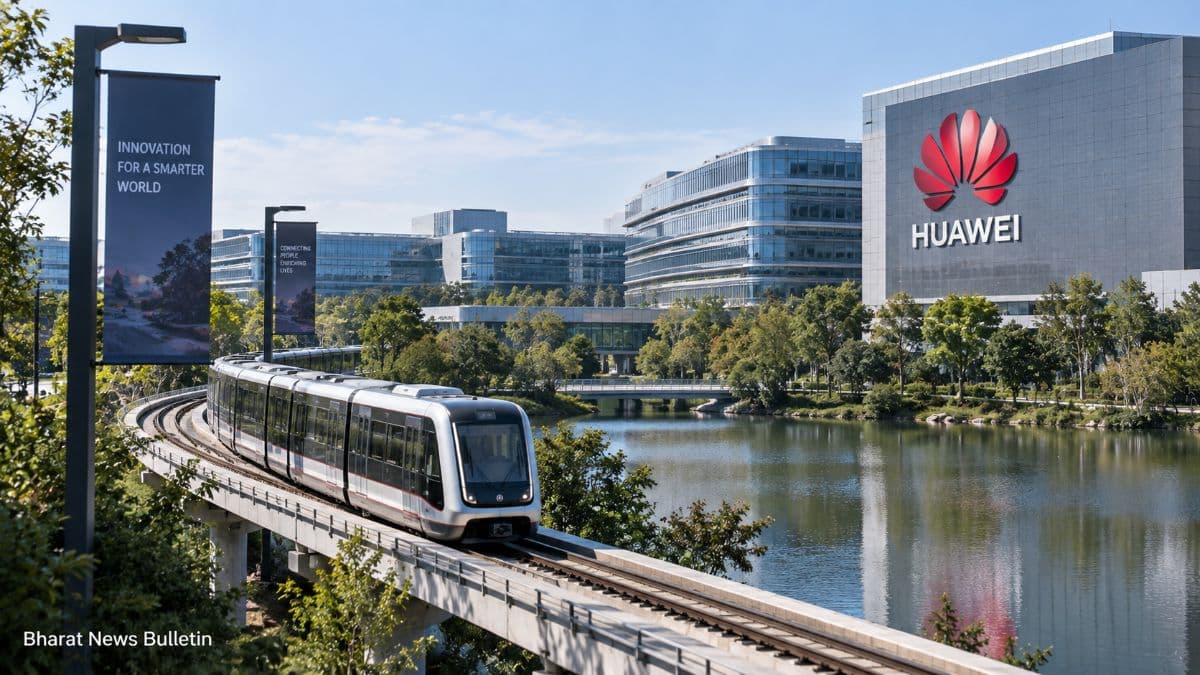
Huawei’s latest forecast sees autonomous AI agents becoming the dominant source of AI token traffic by 2035, driving major demand for computing, storage and network infrastructure.
Huawei expects autonomous AI agents to account for more than 90% of global AI token traffic by 2035, as AI systems increasingly move beyond traditional chatbots to independently perceive information, reason, make decisions and use external tools. The forecast was outlined in Huawei’s latest “Intelligent World 2035: Turning Vision into Action” report.
Huawei said the shift toward agentic AI will cause global annual AI token consumption to increase dramatically over the next decade. The company’s 2026 report projects a 100,000-fold rise in annual token consumption by 2035, creating substantially greater requirements for computing, networking and cloud infrastructure.
The report builds on Huawei’s earlier projection that as many as 900 billion AI agents could be active worldwide by 2035. That figure would be roughly 100 times the projected human population at that time.
Huawei’s report identifies 10 areas it considers important for the development of an increasingly agent-driven digital environment. These include artificial general intelligence, large-scale computing clusters, new storage and memory systems, intelligent connectivity, chip design, agent operating systems, intelligent devices, autonomous driving, AI data-centre power and cooling, and security and privacy.
The company estimates that computing clusters may need to scale by 100 times while the cost of completing AI-agent tasks could fall by 1,000 times. Huawei also argues that AI will increasingly extend from digital applications into physical systems and devices, which it considers important to the development of artificial general intelligence.
Security and control are also a major part of Huawei’s outlook. The company has already deployed autonomous AI agents in cybersecurity and has proposed AI firewall technologies for protecting enterprise AI systems. Its report includes security and privacy among the key technological requirements for the agentic AI era.
Huawei’s projections represent the company’s forecast for how AI could develop over the coming decade rather than an established future outcome. The report comes amid a broader industry debate over the pace of advanced AI development and the safeguards needed as increasingly autonomous systems are deployed.